Do You Need a Permit to Remove a Load-Bearing Wall in St. Catharines?
Yes, in most cases. In St. Catharines, removing or adding walls and making structural alterations are listed as projects that require a building permit. If the wall is load-bearing, you will typically need permit-ready structural drawings before the work begins.
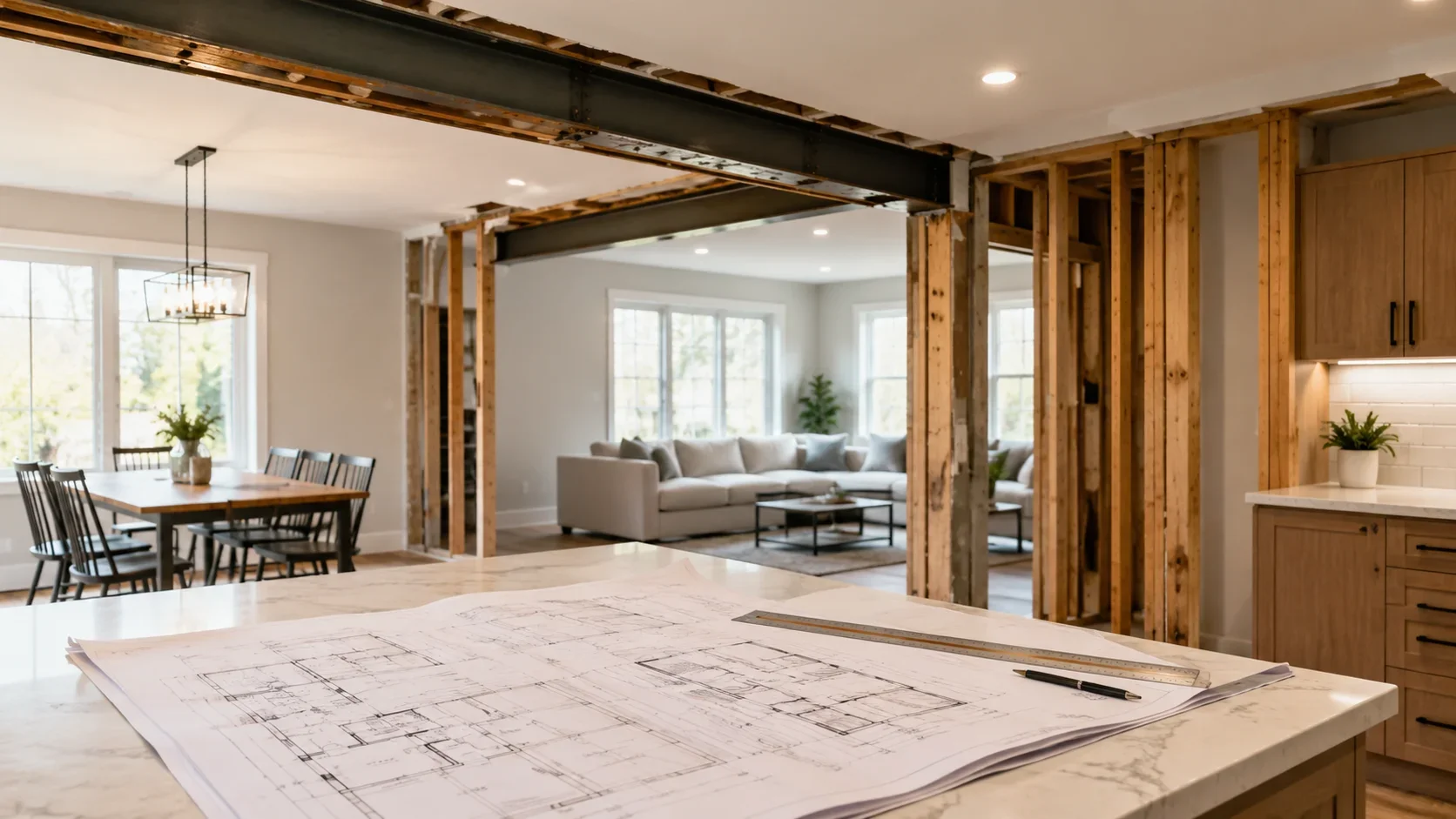
If you are planning to remove a load-bearing wall in St. Catharines, you will most likely need a building permit before starting the work. Removing or modifying a wall that supports floors, ceilings, roof framing, or other structural loads is not just a cosmetic renovation — it changes how your home carries weight.
For most homeowners, the safe approach is simple: before demolition starts, confirm whether the wall is load-bearing and have the proper structural drawings prepared for permit submission.
At ShearPath Engineering, we help homeowners, contractors, designers, and renovators across St. Catharines and Niagara Region with load-bearing wall assessments, beam design, post design, and P.Eng-stamped structural drawings for residential renovations.
Why Removing a Load-Bearing Wall Usually Requires a Permit
A load-bearing wall is part of your home’s structural system. It transfers weight from the roof, upper floors, ceiling joists, or other building elements down to the foundation. When that wall is removed, the load must be safely redirected through another structural element, usually a beam, posts, columns, or a combination of supports.
In St. Catharines, removing or adding walls and making structural alterations are the types of renovation work that typically require a building permit. This is because the City needs to confirm that the proposed work complies with the Ontario Building Code and that the home will remain structurally safe after the alteration.
A building permit helps confirm that:
The proposed beam is properly sized.
Loads are transferred safely to the foundation.
Posts and supports are placed correctly.
The renovation complies with applicable building code requirements.
The work can be inspected at the required stages.
Future buyers, insurers, and building officials can see that the work was completed with proper approvals.
Skipping the permit may seem faster at first, but it can create major issues later, especially if you sell the home, have an insurance claim, or discover structural movement after the renovation.
What Happens If You Remove a Load-Bearing Wall Without Proper Review?
Removing a load-bearing wall without engineering review or permit approval can create serious problems. In some cases, the effects are visible right away. In other cases, the damage develops slowly over time.
Possible issues include:
Sagging ceilings or floors
Cracks in drywall or finishes
Doors and windows that start sticking
Bouncy or uneven floors
Settlement around unsupported areas
Overloaded beams, joists, posts, or foundations
Expensive reconstruction if the work is not accepted by the building department
A wall removal project should not rely on guesswork. Even if a contractor, homeowner, or designer suspects a wall is load-bearing, the final structural solution should be based on how the home is actually framed.
How Do You Know If a Wall Is Load-Bearing?
Some walls are obviously structural, but many are not easy to confirm without opening finishes or reviewing the framing. A wall may be load-bearing if:
It runs perpendicular to the floor joists above.
It is located near the centre of the house.
There is a beam, wall, or post directly below it in the basement.
It supports roof framing, attic framing, or second-floor framing.
It lines up with other walls or supports above or below.
It appears on original structural drawings as a bearing wall.
It carries concentrated loads from another beam or column.
However, these are only clues. The safest way to confirm whether a wall is load-bearing is to have it reviewed by a qualified structural professional.
In many older homes in St. Catharines, previous renovations may have changed the original framing. That means the visible layout may not tell the full story. A proper assessment may require checking the basement, attic, joist direction, wall alignment, existing beams, and any available drawings.
What Does the City Usually Need for a Load-Bearing Wall Removal Permit?
For a load-bearing wall removal permit, the building department will typically need enough information to understand what is being removed and how the structure will be supported afterward.
A permit-ready structural package may include:
Existing floor layout
Proposed wall removal location
Beam size and material
Post or column locations
Bearing details
Connection details
Load path information
Notes for construction and inspection
P.Eng-stamped structural drawings, when required or recommended
The exact requirements can depend on the home, scope of work, and what the City requests during permit review. If you are unsure, it is best to confirm with the City of St. Catharines before starting demolition.
Do You Need a Structural Engineer?
For most load-bearing wall removals, yes, a structural engineer is strongly recommended. The engineer’s role is to determine how the wall is carrying load and design a safe replacement support system.
A structural engineer can help with:
Confirming whether the wall is load-bearing
Reviewing the existing framing
Designing the replacement beam
Designing posts, columns, or bearing supports
Checking load transfer to the foundation
Preparing permit-ready structural drawings
Responding to building department structural comments
Supporting the contractor with clear design intent
This is especially important when the project involves long openings, multi-storey loads, roof loads, point loads, masonry, older framing, or unusual existing conditions.
LVL Beam or Steel Beam: Which One Will You Need?
Many load-bearing wall removals use either an LVL wood beam or a steel beam. The right choice depends on the span, loads, available depth, architectural goals, contractor preference, and site conditions.
An LVL beam may be suitable when:
The span is moderate.
There is enough ceiling depth.
The loads are typical for residential framing.
The contractor wants a wood-based solution.
The beam can be installed without major clearance issues.
A steel beam may be suitable when:
The opening is longer.
The loads are heavier.
Beam depth needs to be minimized.
There are concentrated loads from above.
The design requires higher strength in a smaller profile.
There is no one-size-fits-all answer. The beam should be sized based on the actual loads and conditions in your home.
The Typical Process for Removing a Load-Bearing Wall in St. Catharines
Here is a typical process for homeowners planning this type of renovation:
1. Start With a Structural Review
Before applying for a permit or starting demolition, have the wall reviewed to confirm whether it is load-bearing. Photos, measurements, basement access, attic access, and existing drawings can all help.
2. Prepare the Structural Design
If the wall is load-bearing, a replacement support system needs to be designed. This may include a beam, posts, bearing points, connections, and construction notes.
3. Submit Permit Drawings
The permit package is submitted to the City of St. Catharines for review. Depending on the scope, this may include architectural drawings, structural drawings, and other supporting information.
4. Wait for Permit Approval
Do not remove the wall before the permit is issued. The building department may ask questions or request revisions before approval.
5. Build According to the Approved Drawings
Once the permit is issued, the contractor can complete the work according to the approved drawings. Temporary shoring is usually needed before the existing wall is removed.
6. Book Required Inspections
The permit will identify which inspections are required. For structural work, framing or structural inspections are commonly part of the process.
Common Mistakes to Avoid
When planning a load-bearing wall removal, avoid these common mistakes:
Removing drywall and framing before confirming the permit requirements
Assuming a wall is non-load-bearing because it “sounds hollow”
Relying only on joist direction without checking the full load path
Installing a beam without confirming the posts and bearing points
Forgetting that the beam load must transfer down to the foundation
Choosing a beam based only on what “looks big enough”
Starting work before permit approval
Not coordinating the structural drawings with the contractor’s plan
A successful wall removal depends on more than just the beam. The entire load path matters.
How Much Does Engineering for a Load-Bearing Wall Removal Cost?
The cost of structural engineering depends on the complexity of the project. Factors that can affect cost include:
Wall length and opening size
Number of floors supported
Whether the wall supports roof loads
Beam span and material
Basement/foundation access
Need for site visit
Availability of existing drawings
Complexity of permit comments
Whether multiple design options are requested
For many homeowners, the engineering cost is a small part of the overall renovation, but it is one of the most important steps for safety, permit approval, and long-term performance.
Do You Need a Permit for a Non-Load-Bearing Wall?
Sometimes, removing a non-load-bearing partition may be simpler than removing a structural wall. However, you should still confirm permit requirements with the City, especially if the work affects plumbing, HVAC, electrical, fire separations, exits, basement layouts, or other building systems.
The key point is this: do not assume a wall is non-load-bearing without verification.
Why Homeowners in St. Catharines Choose ShearPath Engineering
ShearPath Engineering provides residential structural engineering services for homeowners, contractors, designers, and renovators across St. Catharines and Niagara Region.
We can help with:
Load-bearing wall assessments
Beam and post design
LVL beam design
Steel beam design
Permit-ready structural drawings
P.Eng-stamped drawings
Structural renovation support
Residential structural assessments
Our goal is to make the engineering side of your renovation clear, practical, and permit-ready.
Planning a renovation in Niagara Region?
ShearPath Engineering can help with load-bearing wall removal, beam design, structural assessments, and P.Eng-stamped permit drawings.
Ahmad Najam, P.Eng.
Ahmad Najam is the Founder and Lead Engineer at ShearPath Engineering. He provides residential structural engineering services across Niagara Region, including load-bearing wall removal design, beam and post design, permit-ready structural drawings, and structural assessments for renovation projects.