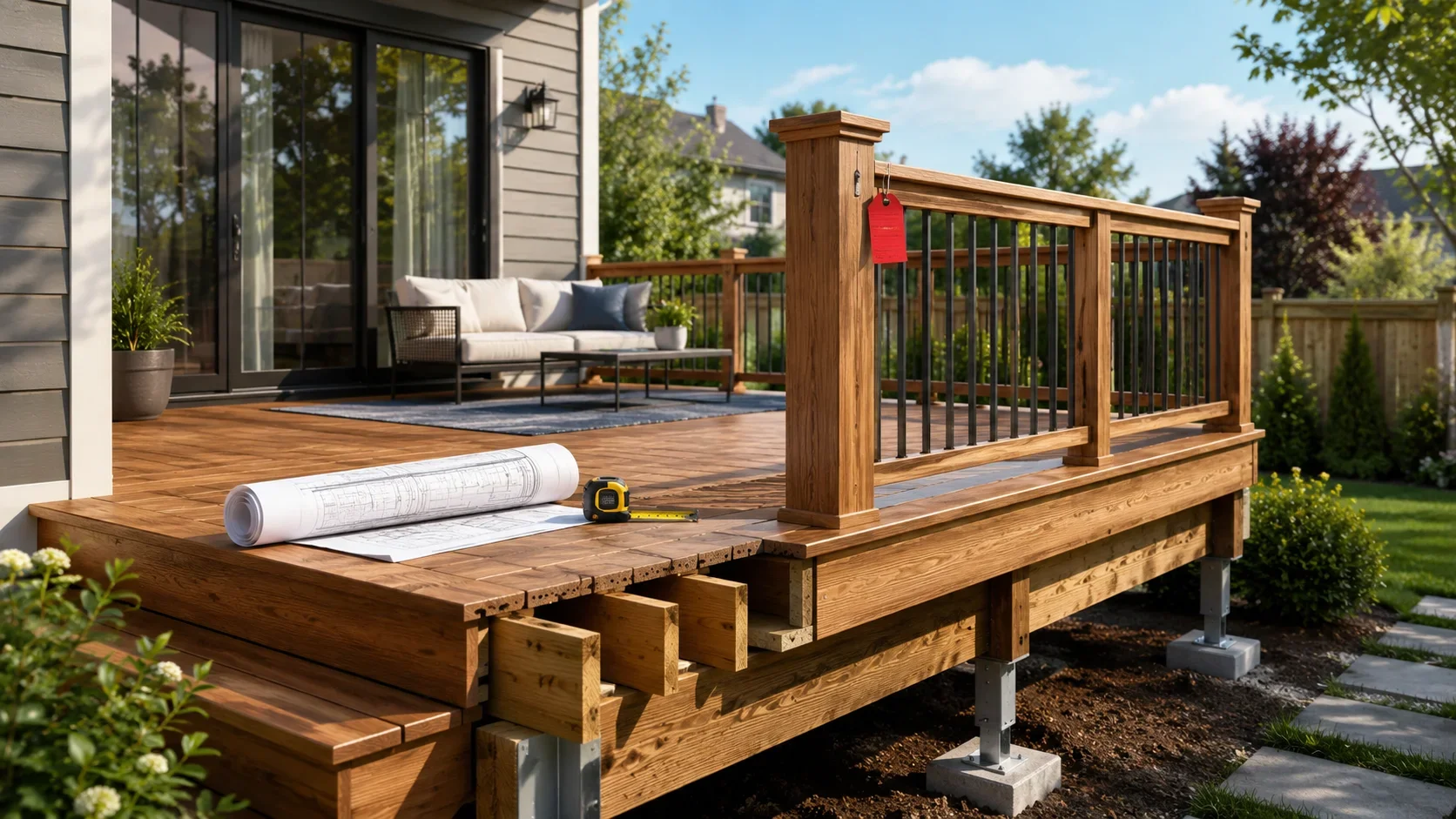
Can You Attach a Deck to Brick Veneer?
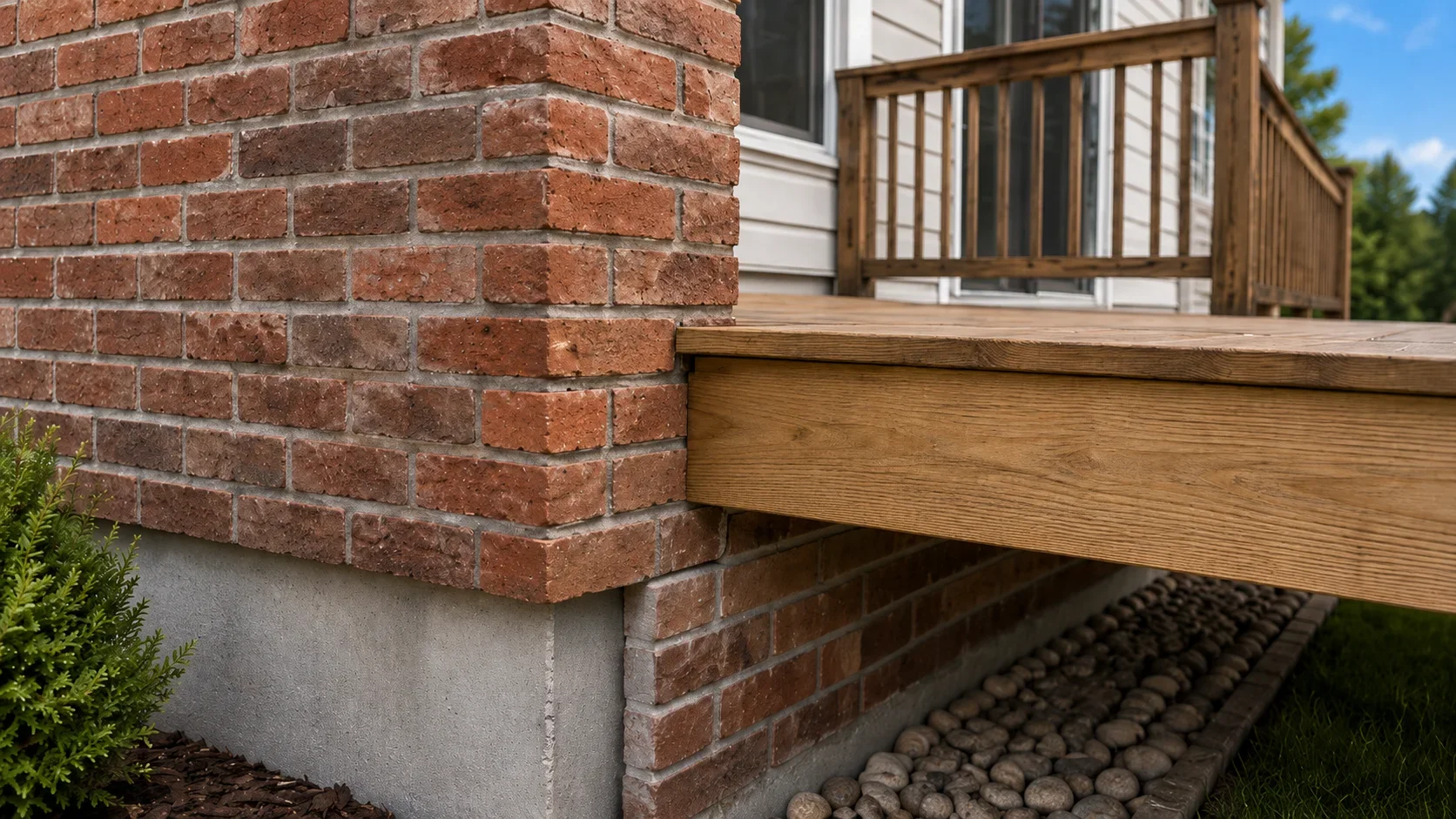
Yes, in some cases—but the connection must be specifically engineered. Brick veneer itself is usually not structural and should not be relied on to support deck loads. A properly designed connection must transfer the loads through or around the veneer into structural framing, a foundation wall, or another suitable support system.
Brick veneer can be misleading.
From the outside, it looks solid and substantial. Many homeowners and contractors assume that a deck ledger can simply be fastened to the brick wall.
The problem is that brick veneer is generally an exterior cladding system rather than the main structural wall of the house. It is not normally intended to support the weight of a deck, people, furniture, snow, or the forces acting on the deck connection.
That does not always mean an attached deck is impossible.
It means the connection needs to be designed so the deck loads are transferred to something structural behind or below the brick veneer.
What Is Brick Veneer?
Brick veneer is typically a single outer layer of brick installed in front of a wood-framed wall.
The brick is connected back to the house using metal ties, but those ties are generally intended to stabilize the brick veneer itself. They are not normally designed to support an attached deck.
In simple terms:
the brick veneer supports its own weight
the framing behind it supports the house
the deck must transfer its loads into a structural element
the brick veneer should not be treated as that structural element
This distinction is important when planning a deck connection.
Can a Deck Be Attached at a Brick Veneer Wall?
Yes, it may be possible.
However, the connection cannot simply rely on the brick veneer in the same way a ledger might be attached directly to exposed structural wood framing or a concrete foundation wall.
A specifically engineered solution may be able to transfer the deck loads:
through the brick veneer to the structural framing behind it
past the brick veneer into the house rim joist
into a concrete foundation wall below
into a separate structural support system
or through an independently supported deck configuration
The appropriate solution depends on the construction of the house, the deck elevation, the framing behind the wall, the condition of the existing materials, and the loads being supported.
Why a Standard Ledger Connection May Not Work
A typical ledger connection assumes that the ledger is fastened directly to a structural material capable of carrying the deck loads.
Brick veneer creates additional complications because:
there may be an air space behind the brick
the veneer can crack or crush if it is clamped improperly
the structural framing is concealed
the fasteners may not be engaging the intended structural member
the connection may create water-entry risks
the load path may be unclear without an engineered detail
Large bolts alone do not make the connection acceptable.
The important question is where the forces go after they leave the ledger.
A deck connection should not be judged only by the size or number of bolts. The connection must transfer the deck loads into a structural part of the house without relying on the brick veneer.
What Is a Structural Load Path?
A load path is the route that forces follow through a structure.
For a typical deck, the load path may include:
Deck boards transfer load to joists.
Joists transfer load to beams and the ledger.
Beams transfer load to posts.
Posts transfer load to footings.
The ledger transfers load into the house structure.
At a brick veneer wall, the engineered connection must continue that load path past the veneer and into a reliable structural element.
If the connection stops at the brick veneer, the load path is incomplete.
Possible Deck Support Approaches
The best approach depends on the existing house and deck configuration.
Potential options may include:
1. An Engineered Connection Through the Veneer
In some situations, a structural engineer can design a connection that transfers loads through the veneer into the house framing.
This is not the same as simply installing conventional ledger bolts through the brick. The connection must be designed for the actual wall construction and deck loads.
2. Connection to a Foundation Wall
If the deck elevation and foundation configuration allow it, the deck may be connected to a poured concrete or suitable structural foundation wall.
3. Freestanding or Independently Supported Deck
The deck may be supported by its own beams, posts, and footings rather than relying on a ledger at the brick wall.
4. Engineered Retrofit of an Existing Deck
For a deck that is already built, a structural engineer may be able to design a retrofit using additional posts, beams, brackets, blocking, footings, or other structural components.
The right solution should be selected based on the actual site conditions rather than using a one-size-fits-all detail.
What If the Deck Is Already Attached to Brick Veneer?
An existing deck connection should be reviewed before assuming that it is acceptable.
A structural review may consider:
whether the deck is actually relying on the veneer
what framing exists behind the brick
the ledger size and location
fastener type, spacing, and embedment
whether the deck has independent supports near the house
the condition of the brick and mortar
signs of cracking, movement, or separation
water damage or deterioration near the ledger
the deck framing, posts, beams, and footings
whether a practical retrofit is available
In some cases, the existing deck may need only a targeted retrofit. In others, a new support or connection system may be required.
When Is Engineering Recommended?
You should consider obtaining an engineered design if:
the house has brick veneer where the deck ledger is proposed
the deck is already attached through brick veneer
the building department has questioned the connection
the deck was built without a permit
the structural framing behind the brick is concealed
the deck cannot easily be made freestanding
the deck must connect near a door or elevated floor level
the deck is elevated or carries significant loads
the existing connection is moving, cracking, or deteriorating
you need permit-ready structural details
A structural engineer can review the existing conditions and determine whether an attached solution is practical.
How ShearPath Engineering Can Help
ShearPath Engineering can assess deck connections at brick veneer walls and prepare project-specific structural details where an engineered attachment is required.
Depending on the project, our work may include:
reviewing the existing house and deck construction
identifying the structural framing or foundation available for support
evaluating the proposed load path
designing an appropriate connection or retrofit
preparing P.Eng.-stamped structural drawings
supporting the building permit process
responding to structural comments from the municipality
The design is developed for the specific property rather than relying on a generic ledger detail that may not suit the wall construction.
What Information Should You Provide?
Helpful information includes:
the property address
photos of the exterior wall and proposed deck location
photos of the basement or interior framing near the connection
deck dimensions and height
existing architectural or structural drawings
information about the wall construction
photos of an existing ledger or fasteners
permit comments, if already received
whether the deck is new or already constructed
A site visit may be needed where the structural framing is concealed or the existing connection cannot be confirmed from photographs.
Final Takeaway
A deck should not be supported by brick veneer itself.
However, that does not necessarily mean an attached deck is impossible. In some situations, a specifically engineered connection can transfer the deck loads through or around the veneer into structural framing, a foundation wall, or another suitable support.
The important issue is not whether the house has brick on the outside. The important issue is whether the deck has a complete and reliable structural load path.
Need to attach a deck at a brick veneer wall?
ShearPath Engineering can review the existing conditions and prepare a project-specific engineered connection or retrofit for permit and construction.
Ahmad Najam, P.Eng.
Ahmad Najam is the Founder and Lead Engineer at ShearPath Engineering. He provides residential structural engineering services across Niagara Region, including load-bearing wall removal design, beam and post design, permit-ready structural drawings, and structural assessments for renovation projects.